Dreams of the Harmonic Reed System
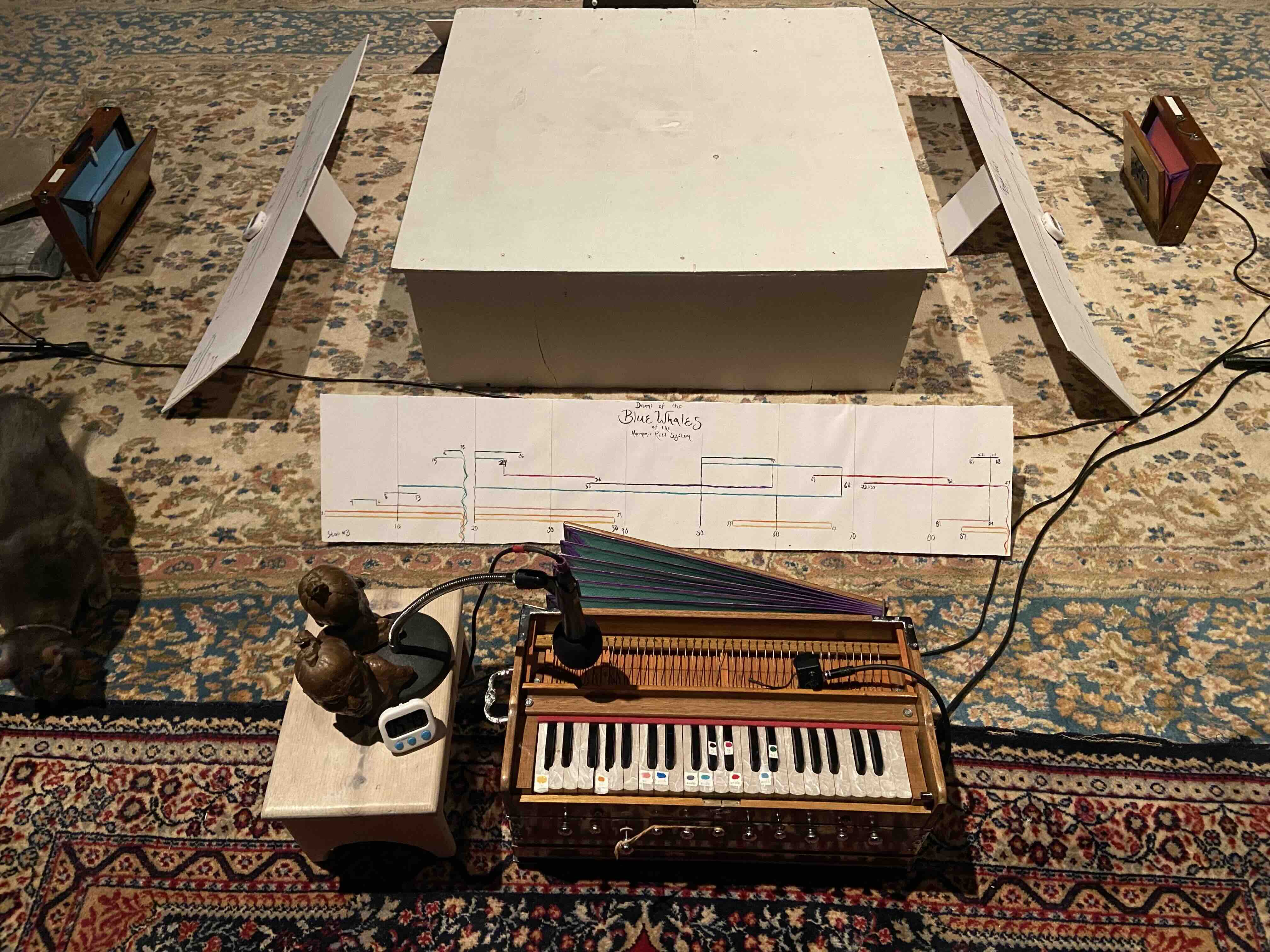
A 90-minute piece for shruti box and harmonium quartet with movement, scored with hand-painted, time-based notation.
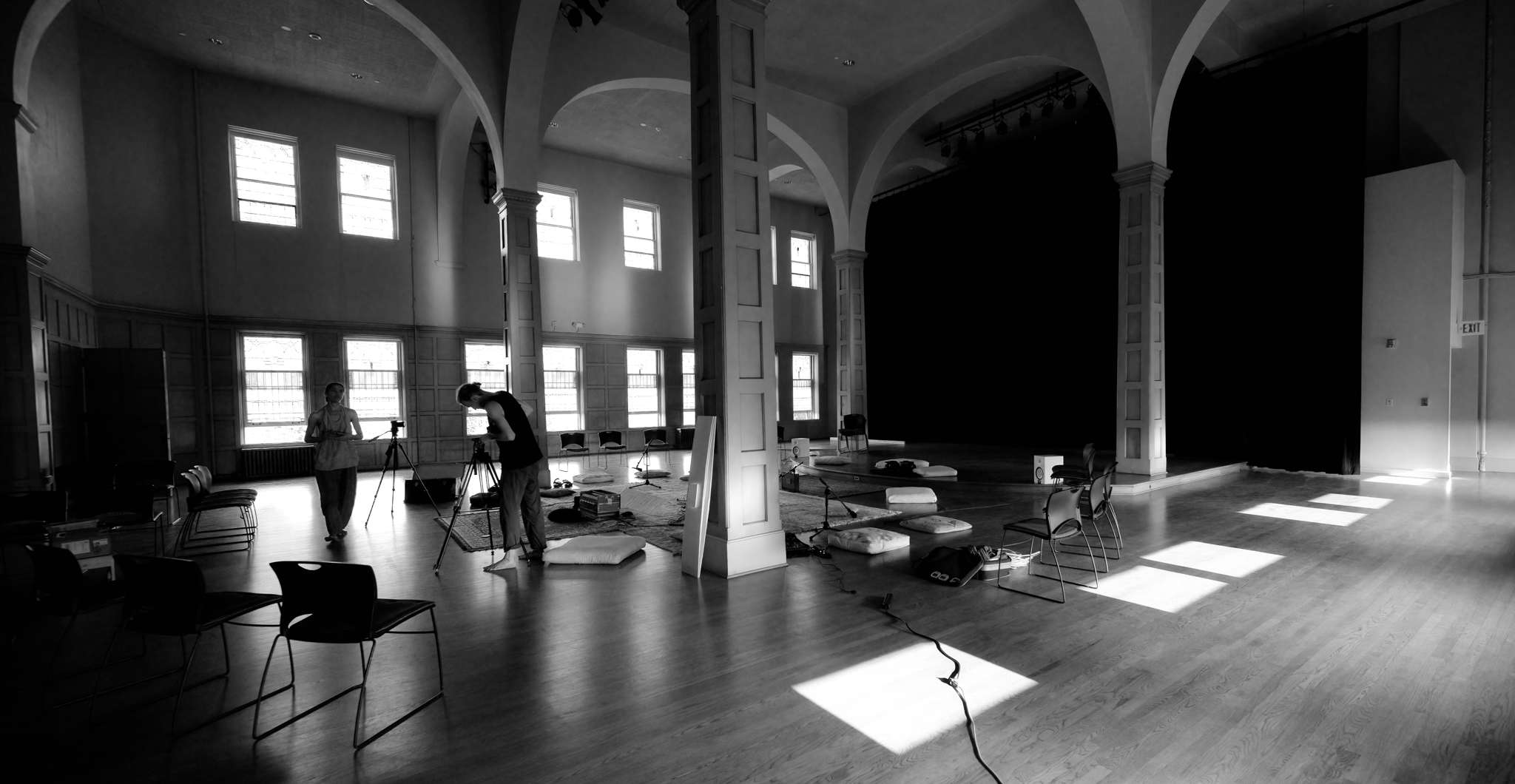
- • August 14, 2021, Chapel Performance Space, Seattle, WA, USA
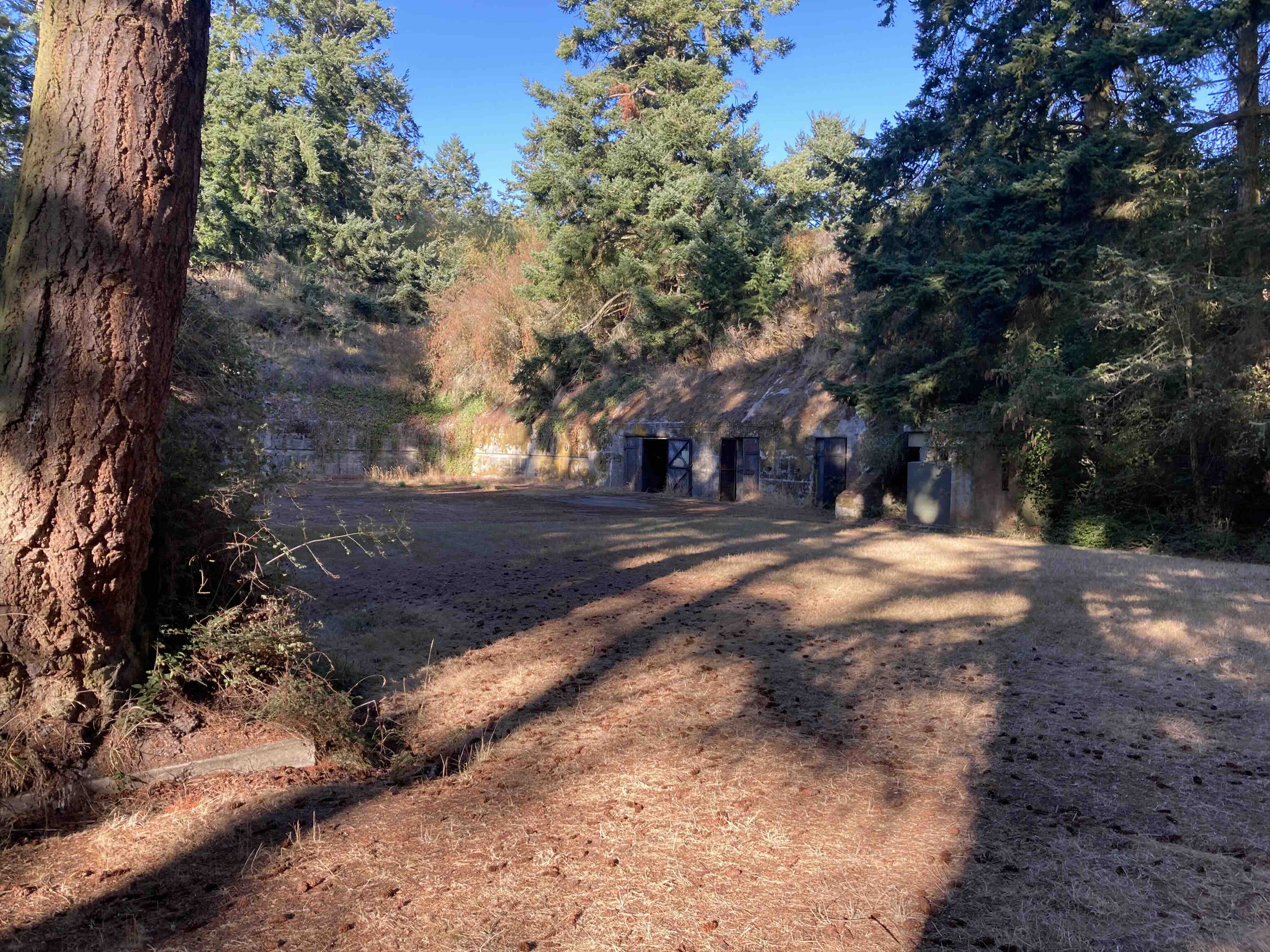
- • October 2, 2021, Battery John Brannon, Fort Worden State Park, Port Townsend, WA, USA
- • April 19, 2024, Artlab Thuja, Chimacum, WA, USA
Credits:
- Performed by Glacial Time Communion
- Joey Largent — 7-limit harmonium, composition, hand-painted scores (Fort, Chapel, Artlab)
- Katrina Wolfe — movement, handmade costume (Fort, Chapel, Artlab)
- Danielle Quenell — 7-limit shruti box (Fort + Chapel, 2021)
- Taehyung Kim — 17-limit shruti box (Fort + Chapel, 2021)
- Sasha Leon — 7-limit shruti box (Fort, 2021)
- Kaliane Van — 7-limit shruti box (Chapel, 2021)
- Sam Vanderlinda — 7-limit shruti box (Artlab, 2024)
- Kawtee Wolfe — 17-limit shruti box (Artlab, 2024)
- David Noble — 7-limit shruti box (Artlab, 2024)
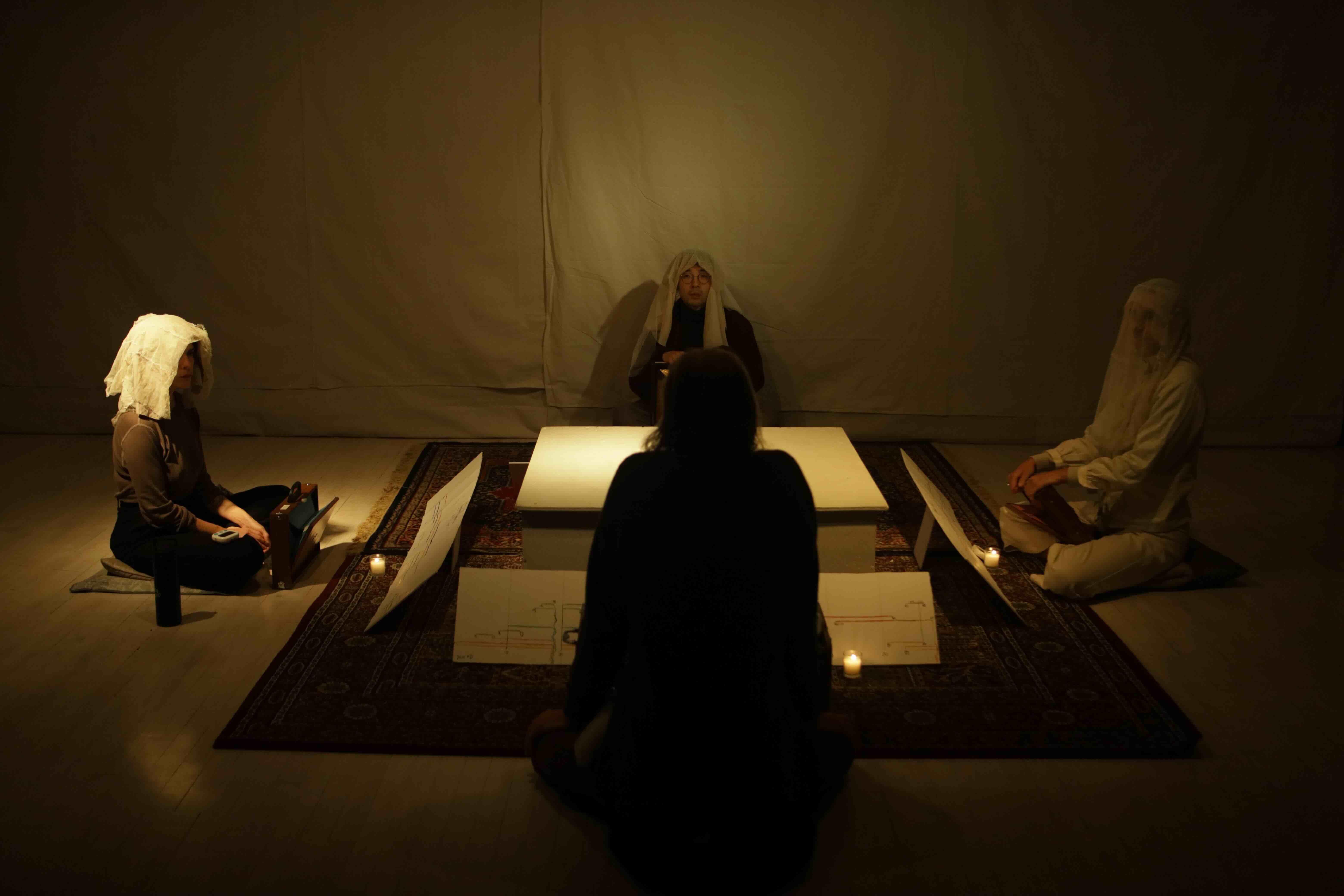
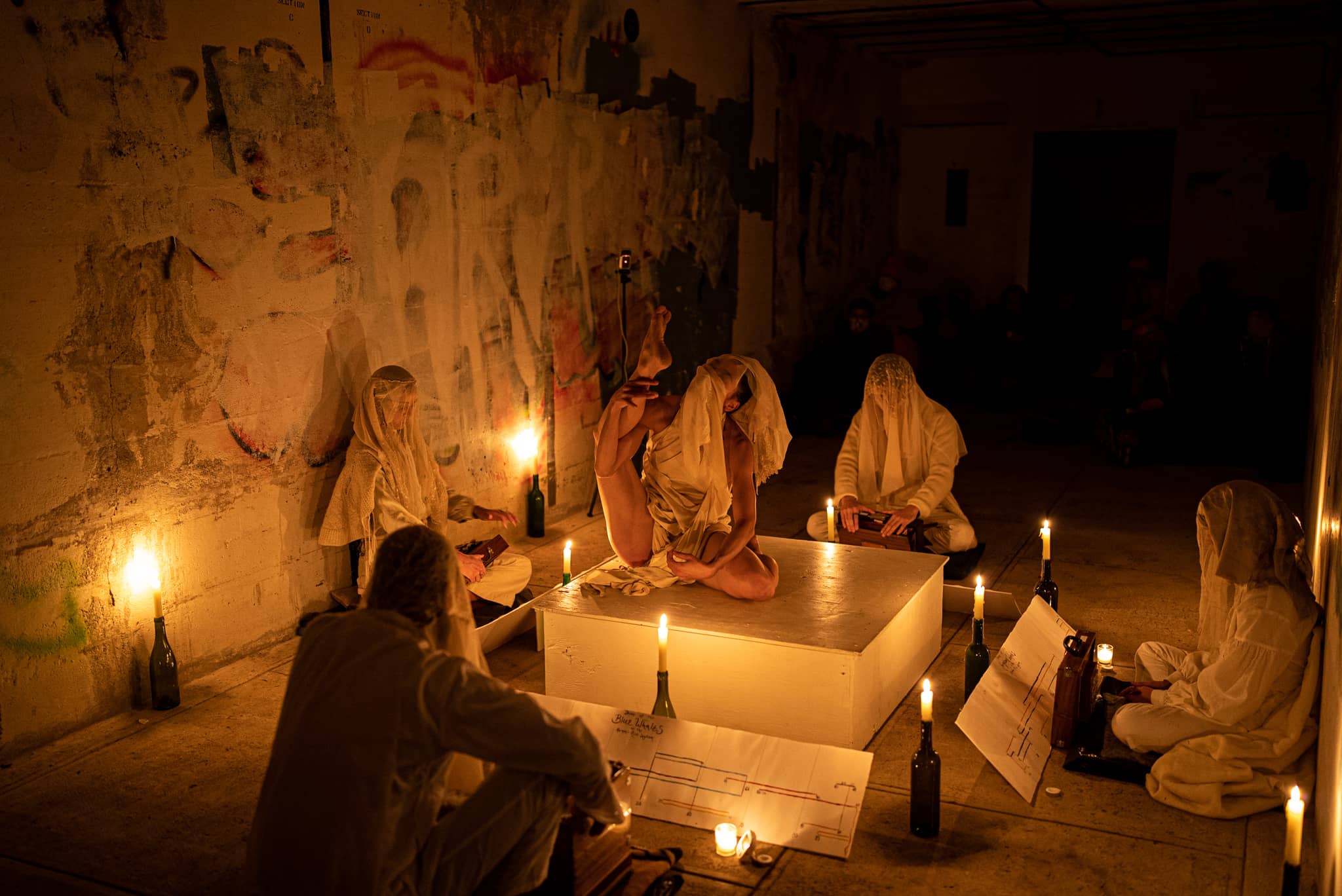
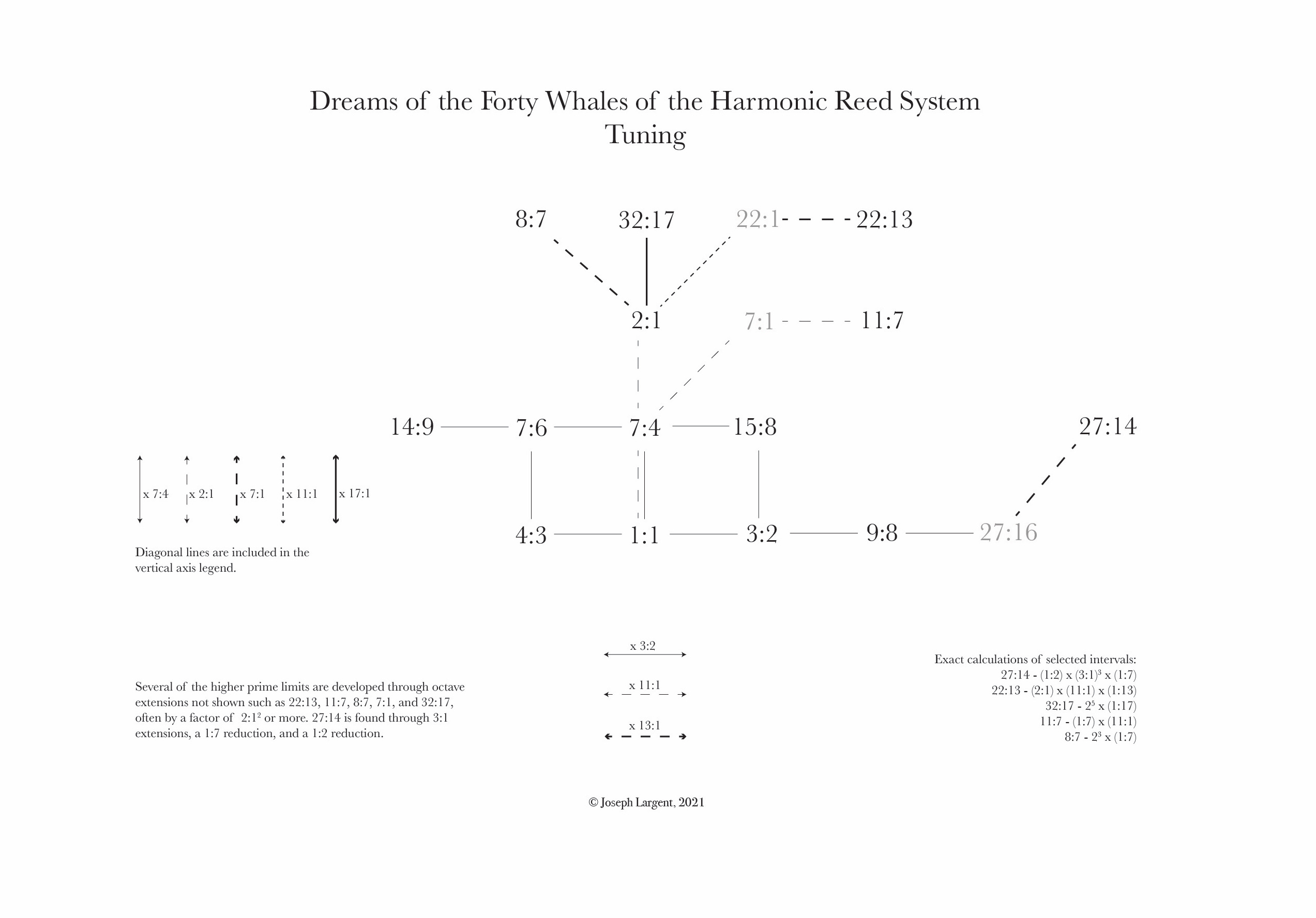
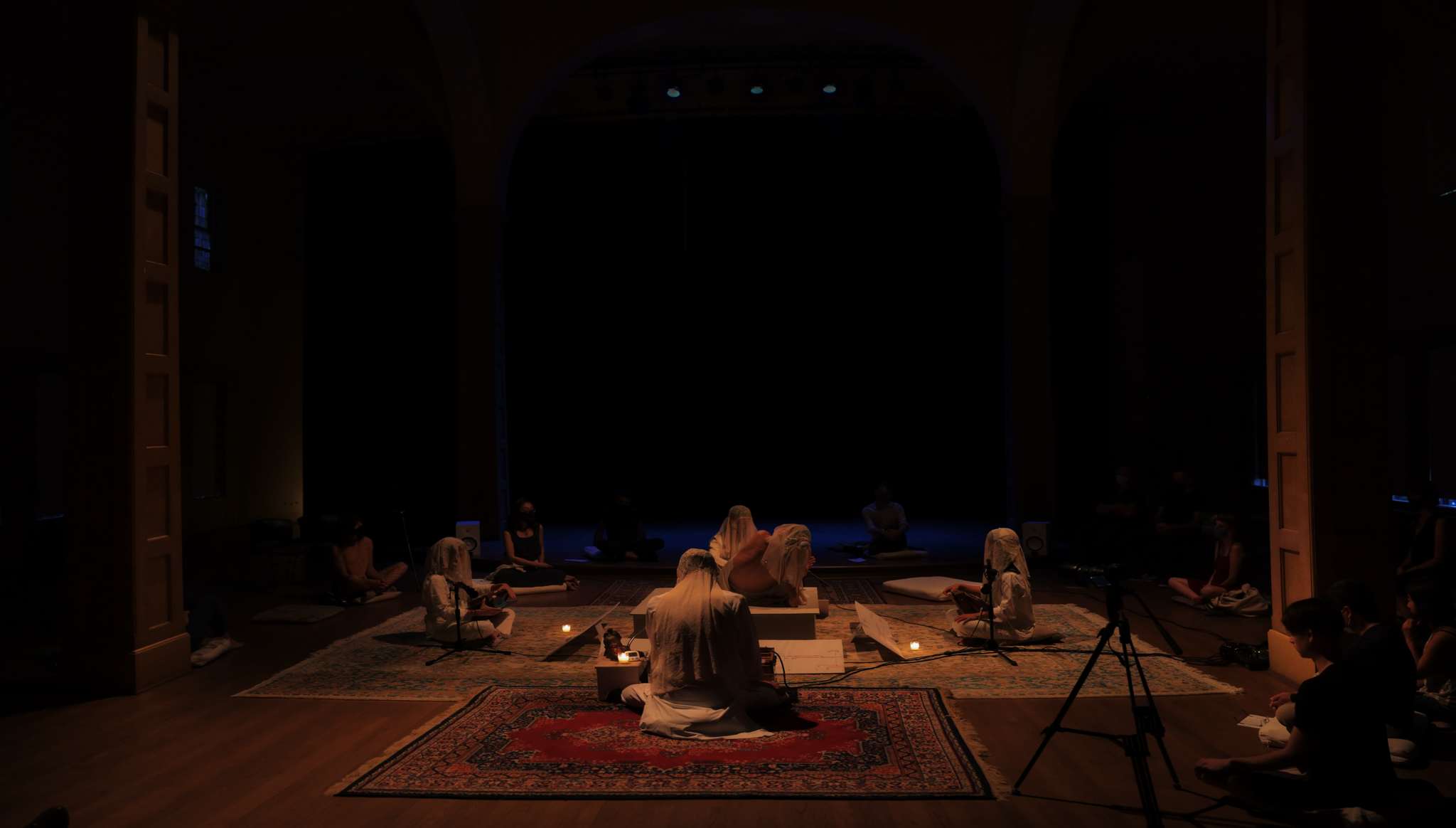
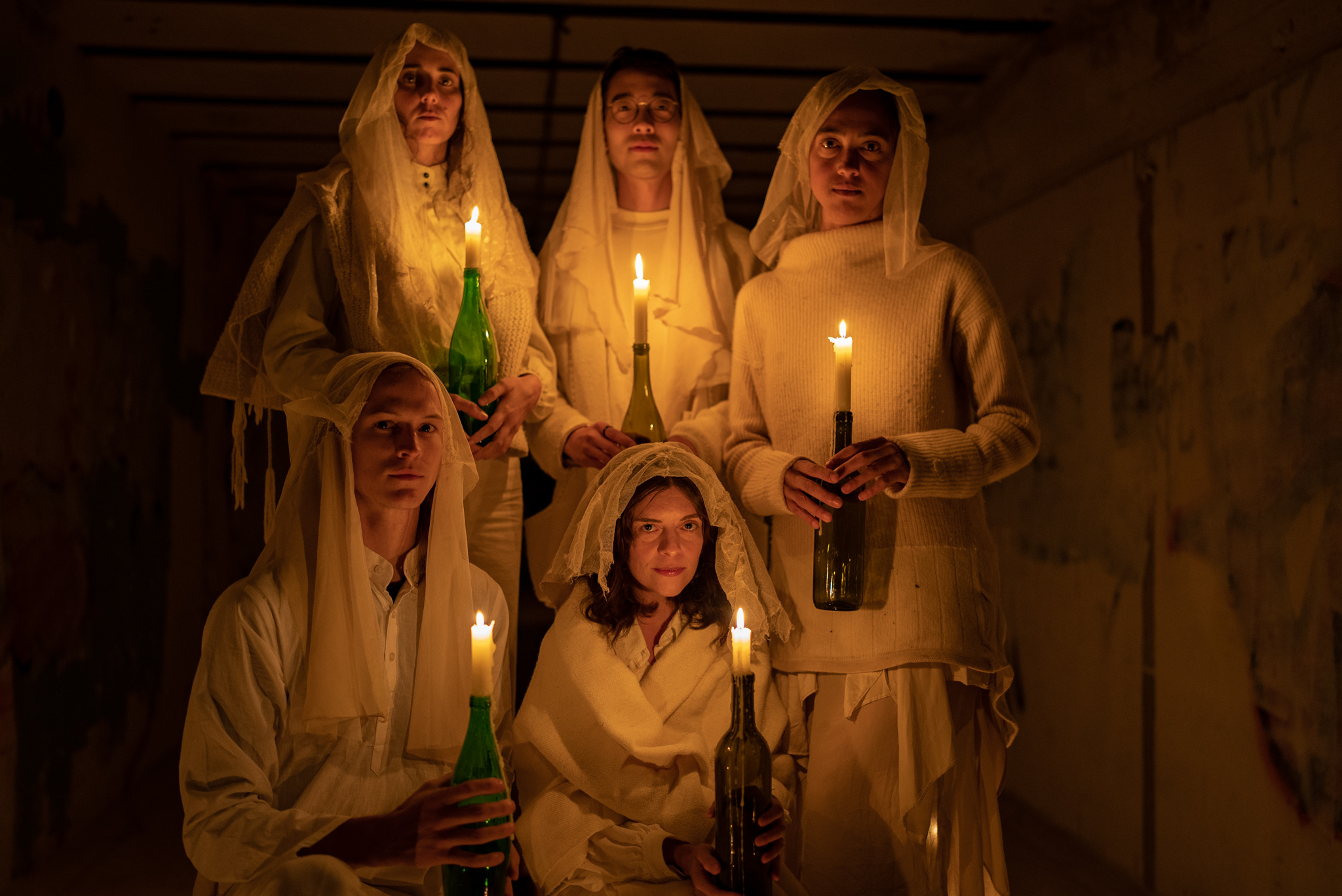
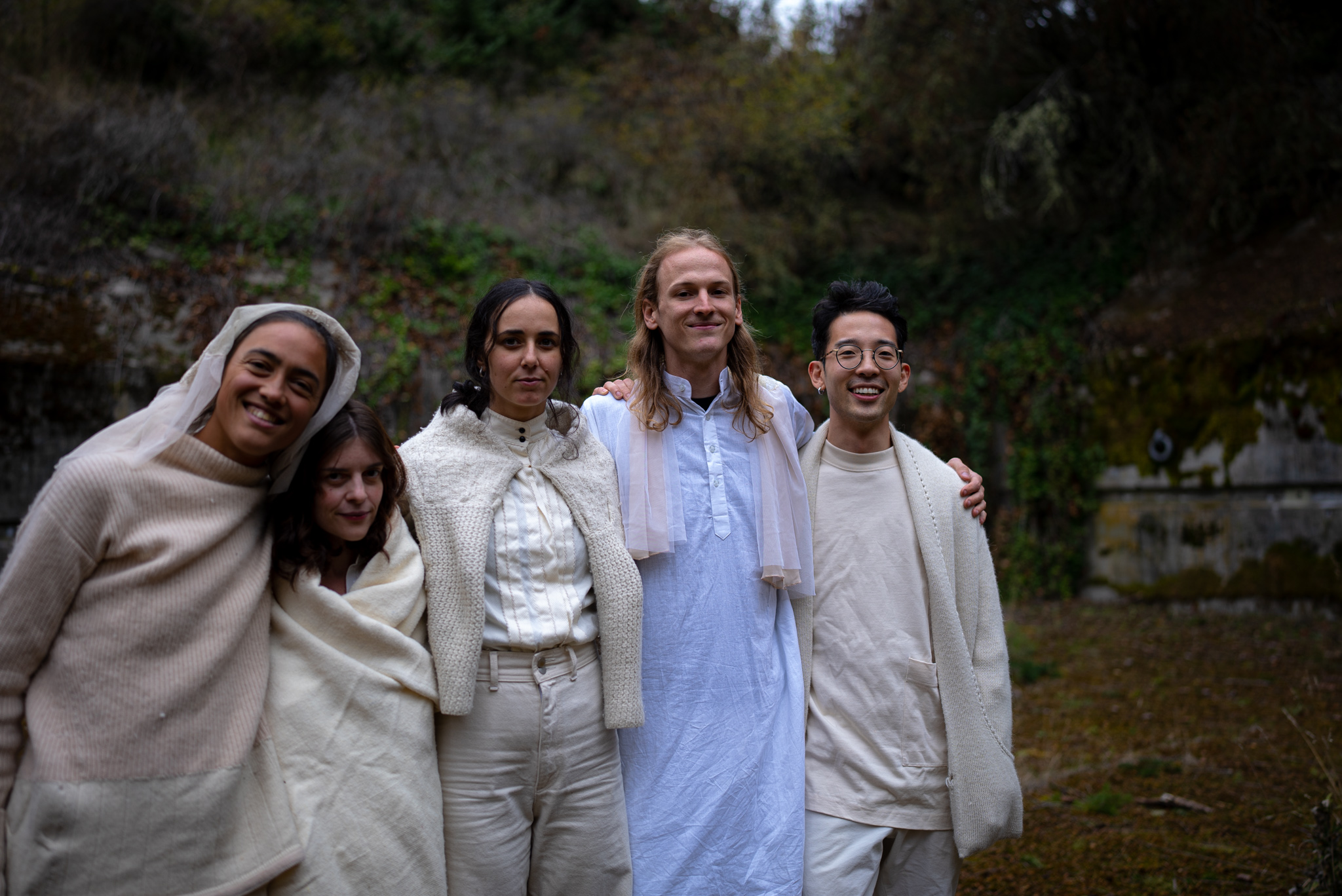
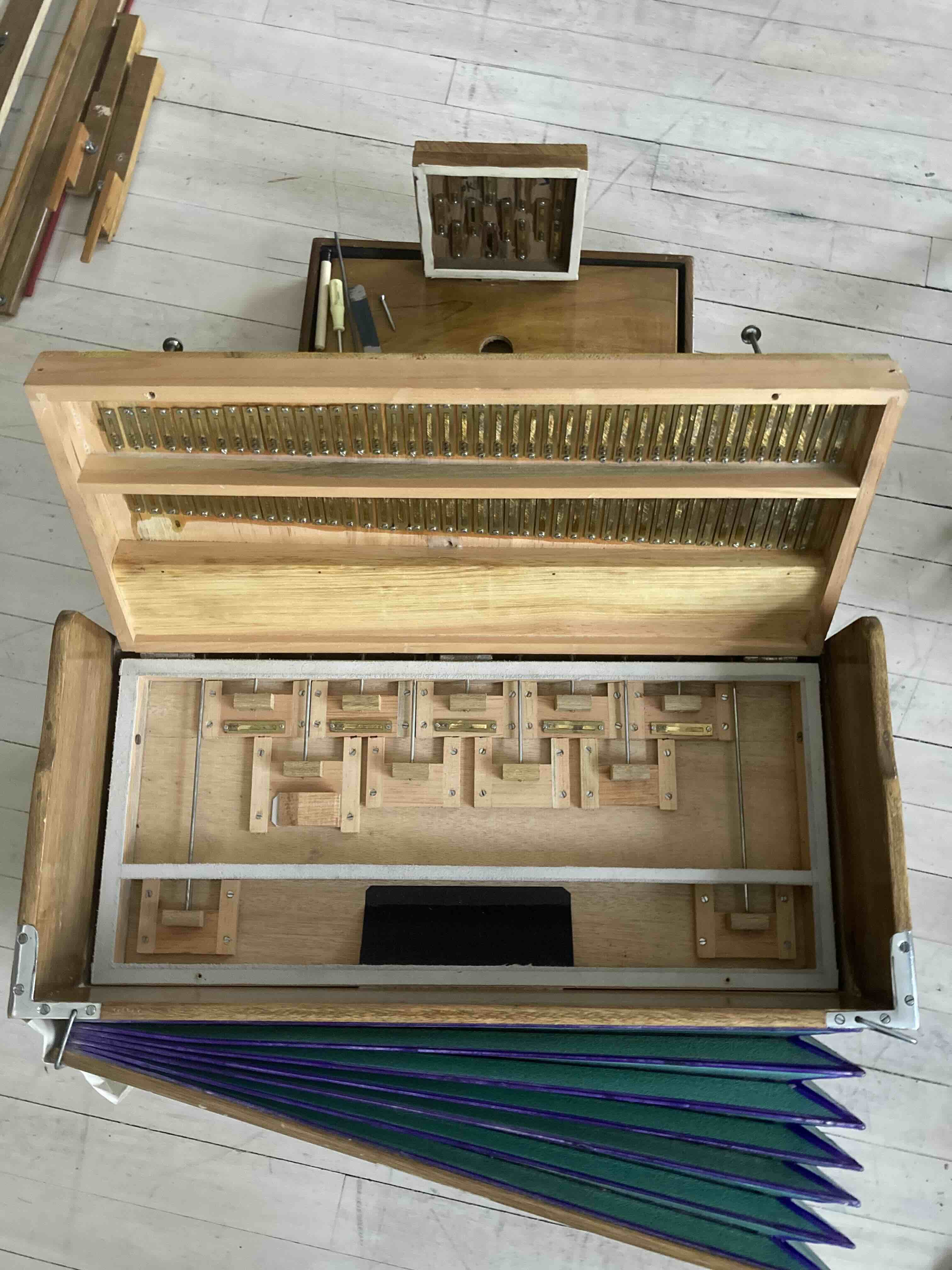
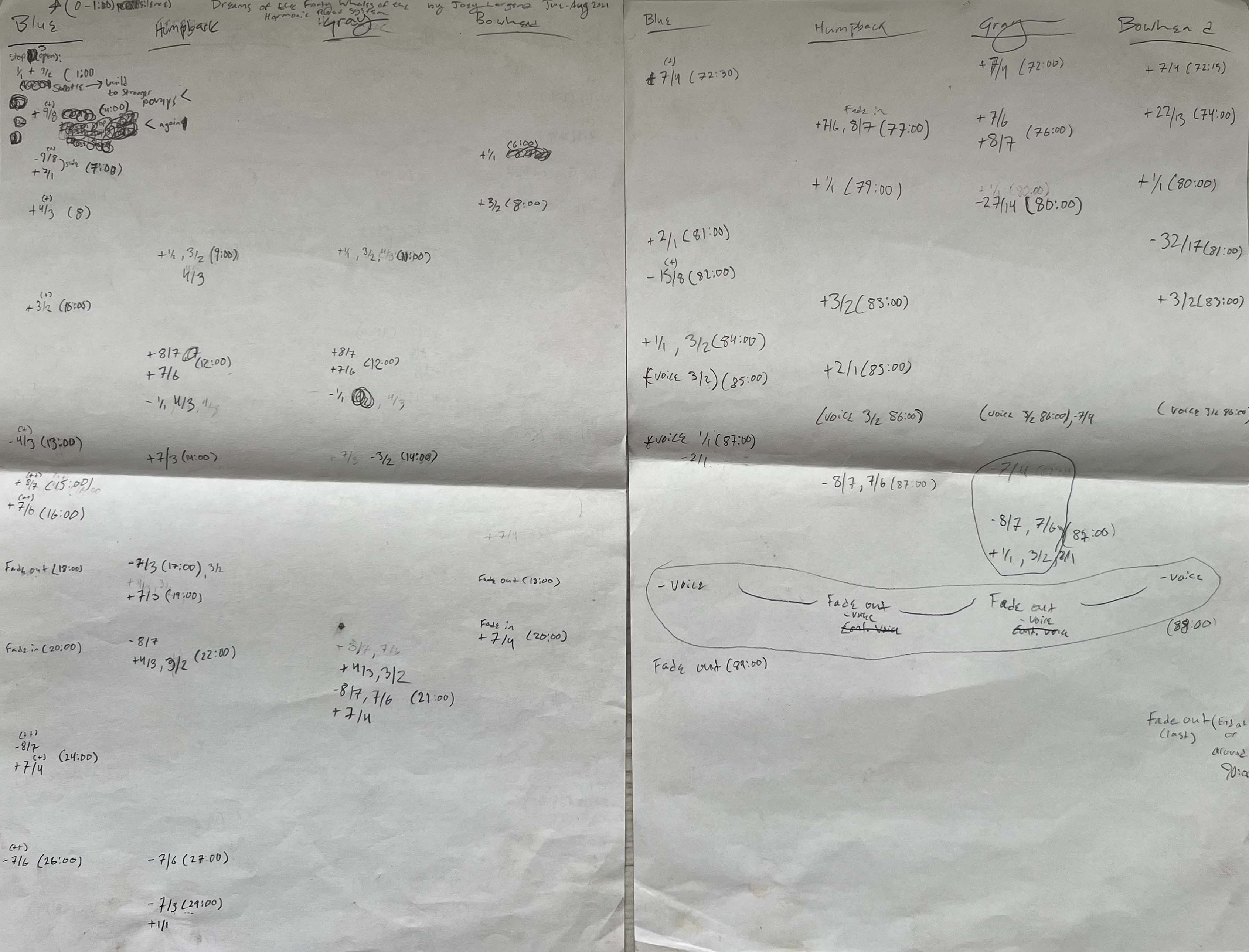
Dreams of the Harmonic Reed System (also known as Dreams of the Forty Whales of the Harmonic Reed System) is a 90-minute composition for three shruti boxes and one harmonium retuned into 17-limit just intonation. The work was performed by Glacial Time Communion three times and paired with live movement by Katrina Wolfe.
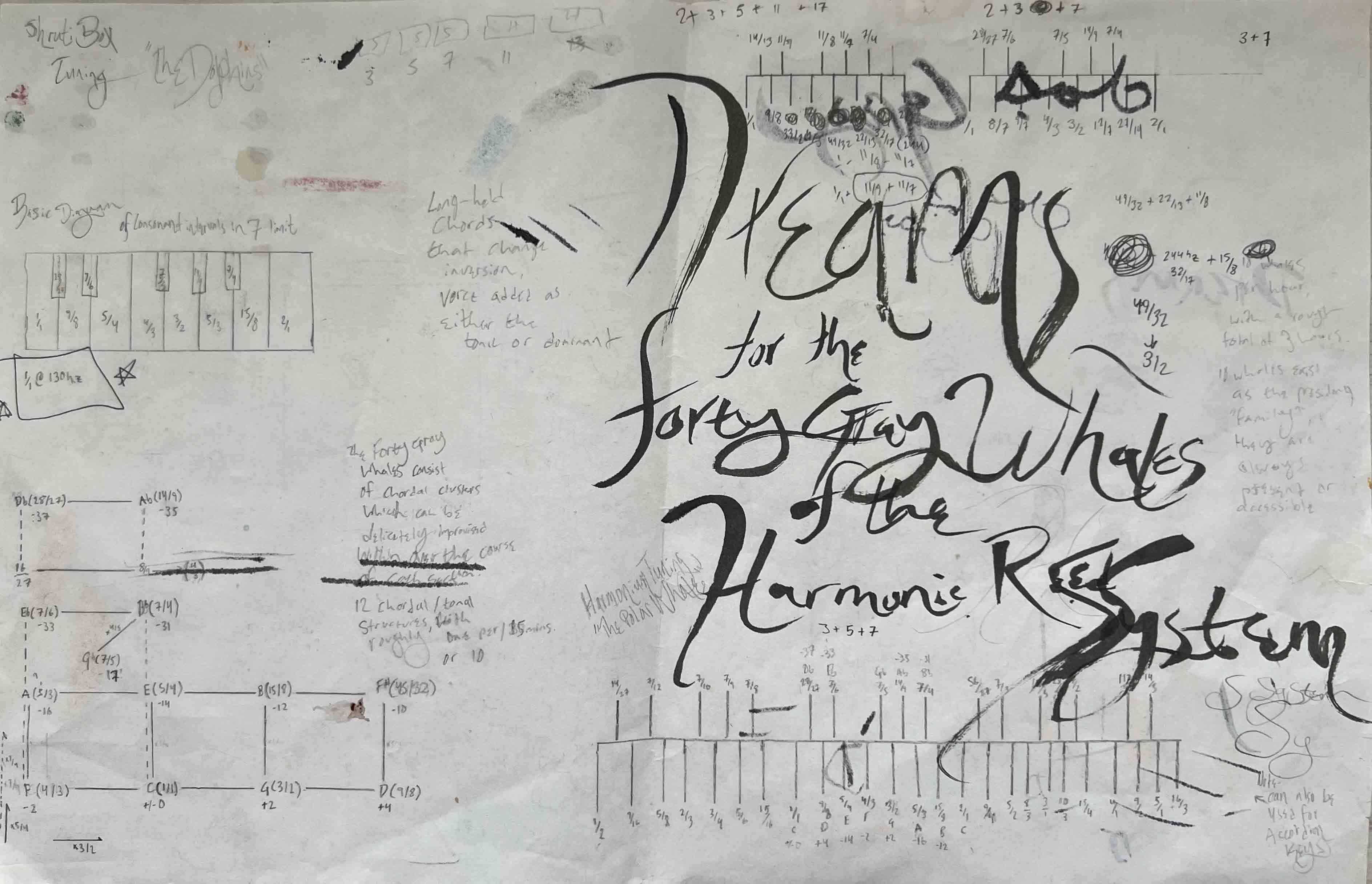
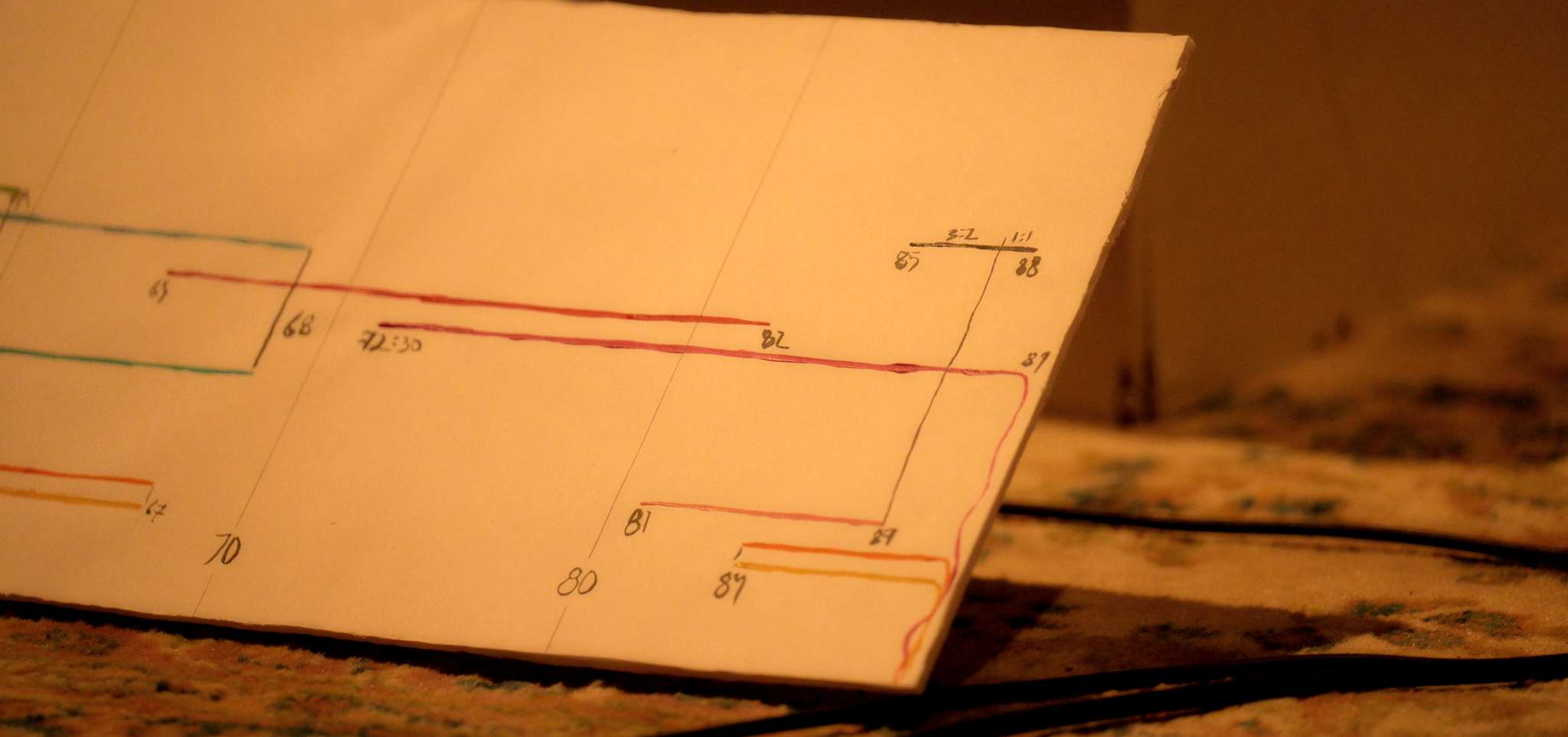
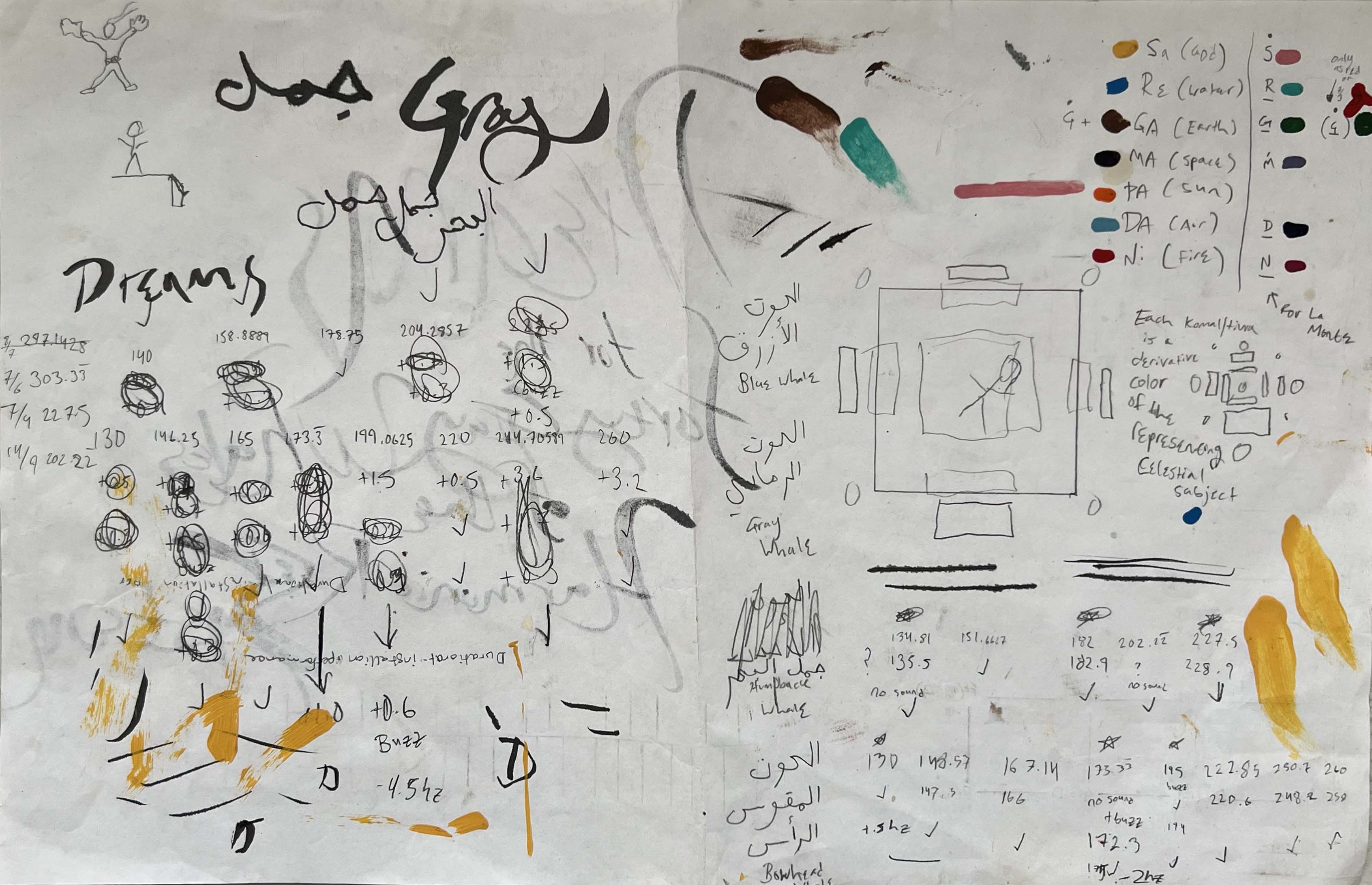
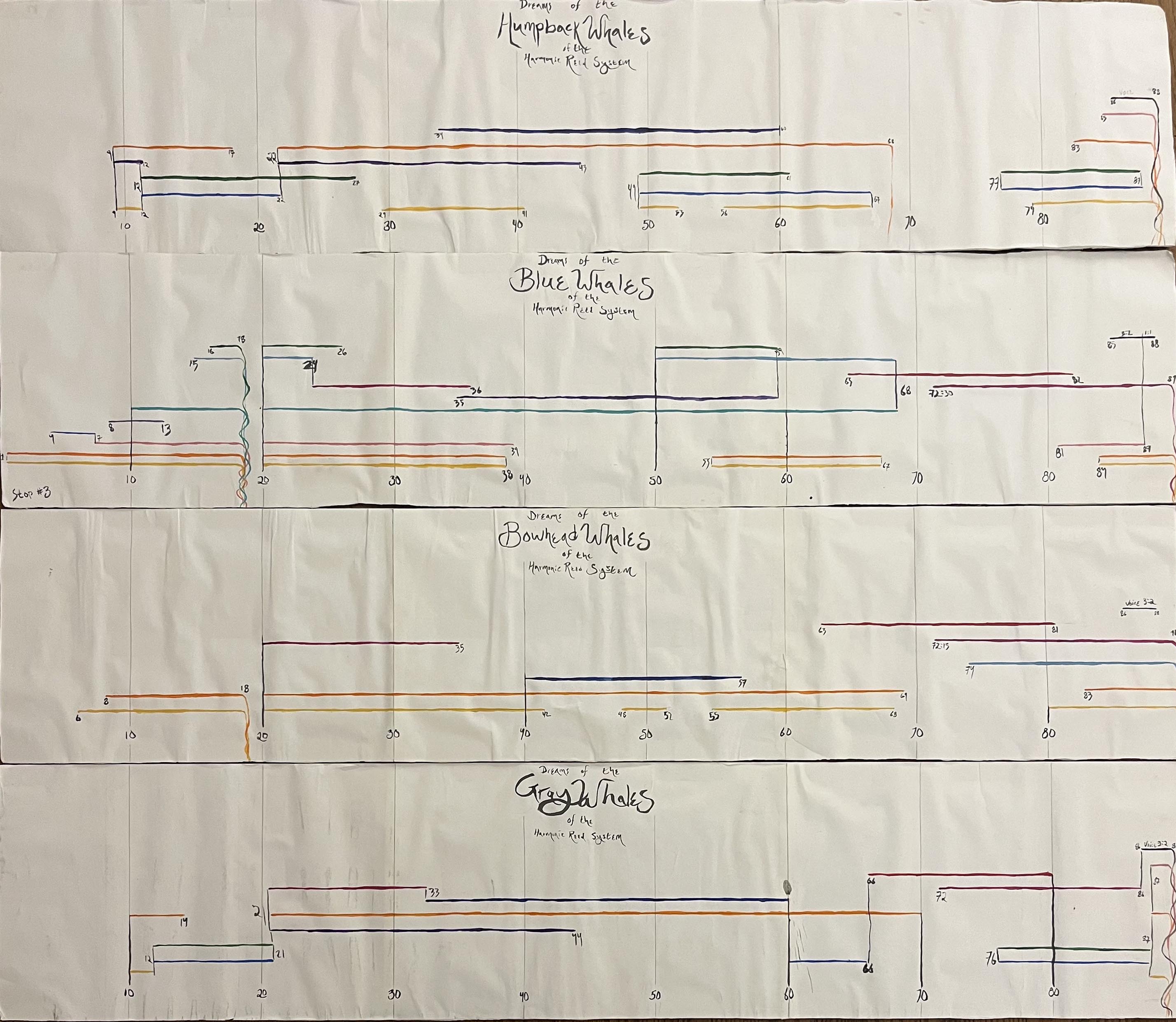
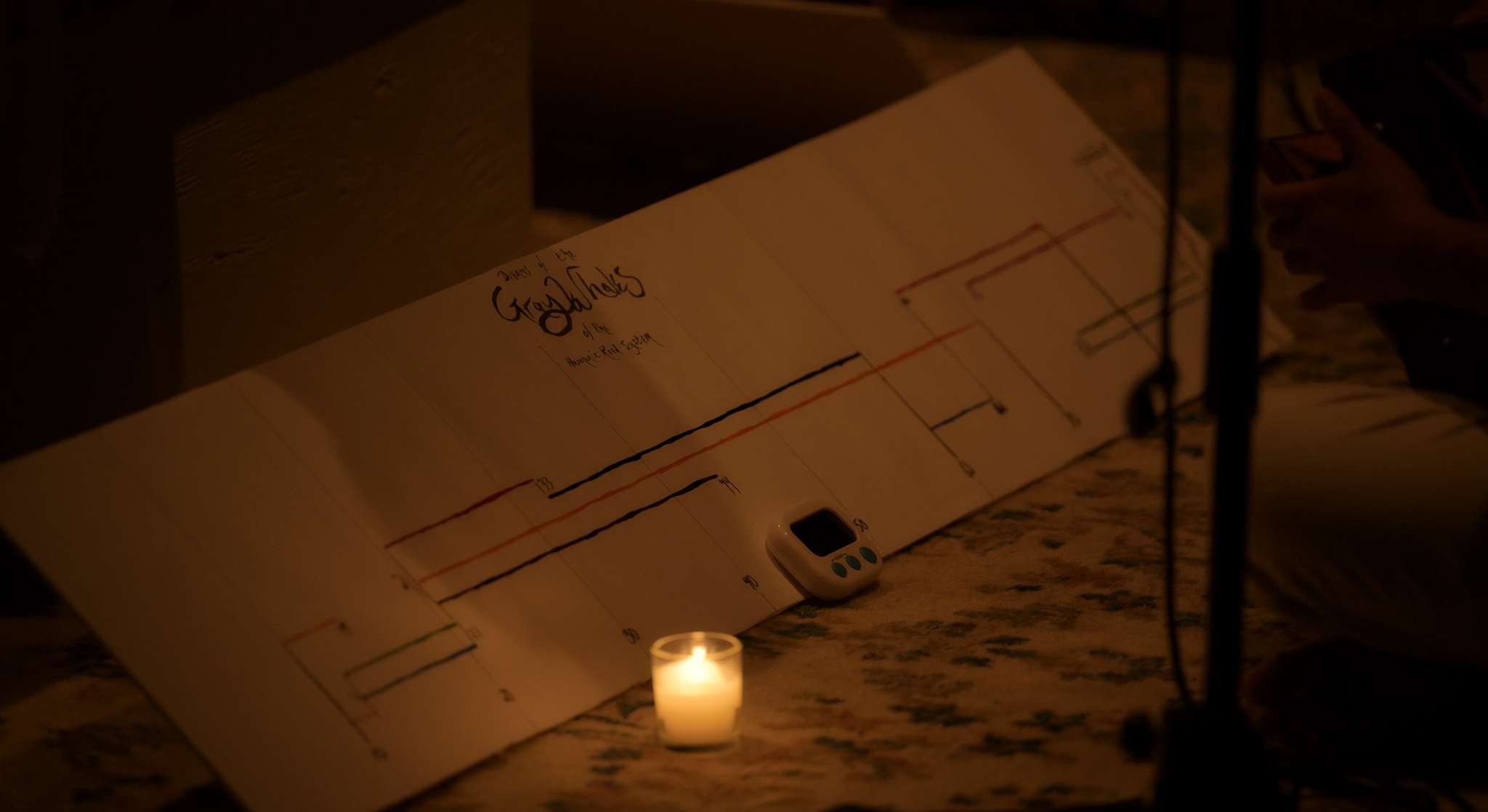
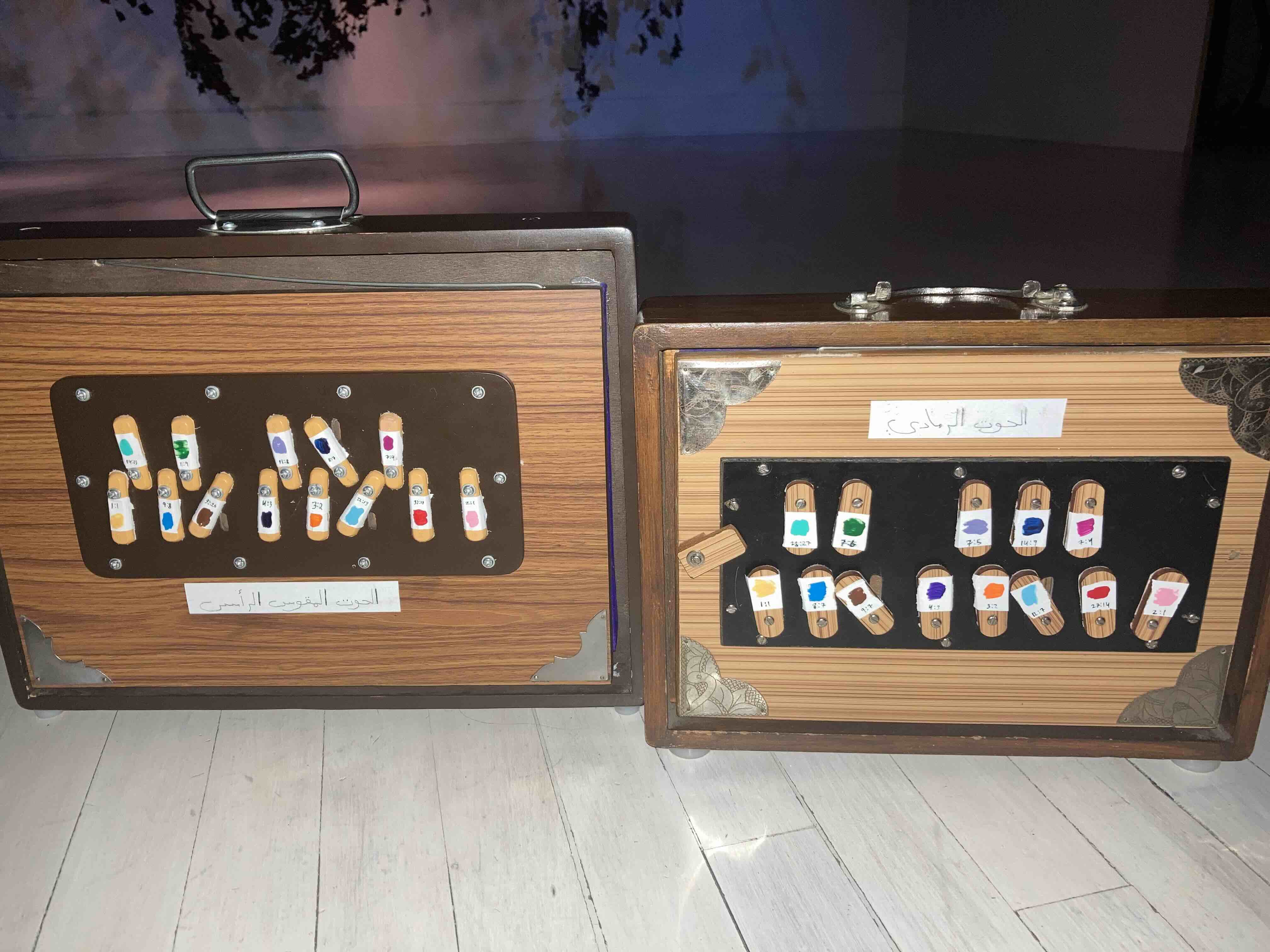
The piece is scored using an invented graphic notation made with paint and sumi ink on paper. On the horizontal axis, colored lines correspond to the colored valves of the shruti boxes. The vertical axis represents time. This simple but precise visual system allows performers to navigate harmonic space through color rather than pitch names, making the work accessible to musicians with little or no formal training while still offering a sonically hallucinatory environment.
The shruti boxes operate within various extended-limit just intonation tunings (beyond the 7th prime), while the harmonium is tuned to function as a structural anchor in 7-limit. The harmonic field unfolds slowly, with beating patterns, overtone reinforcement, and gradual modal drift emerging through duration rather than event.
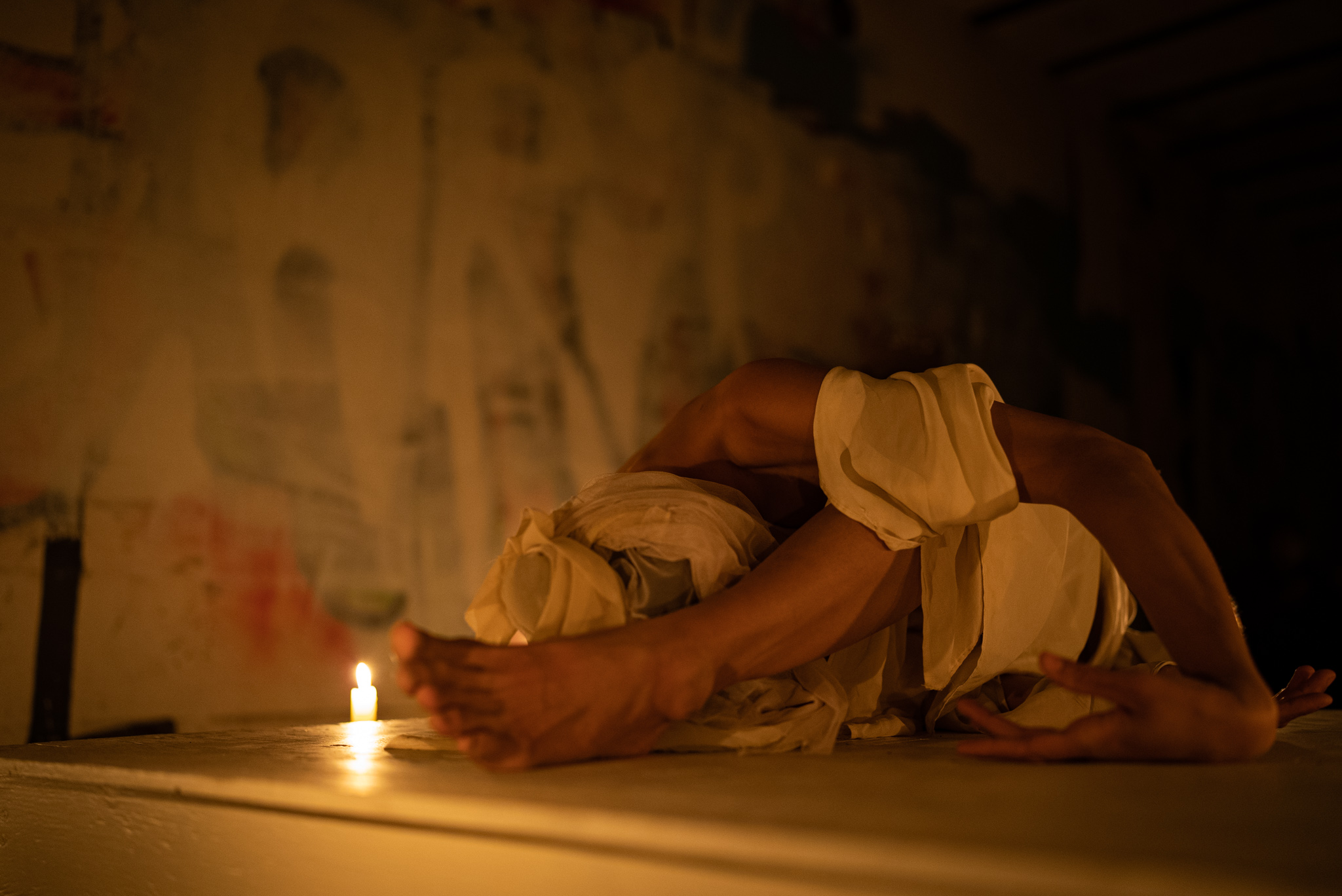
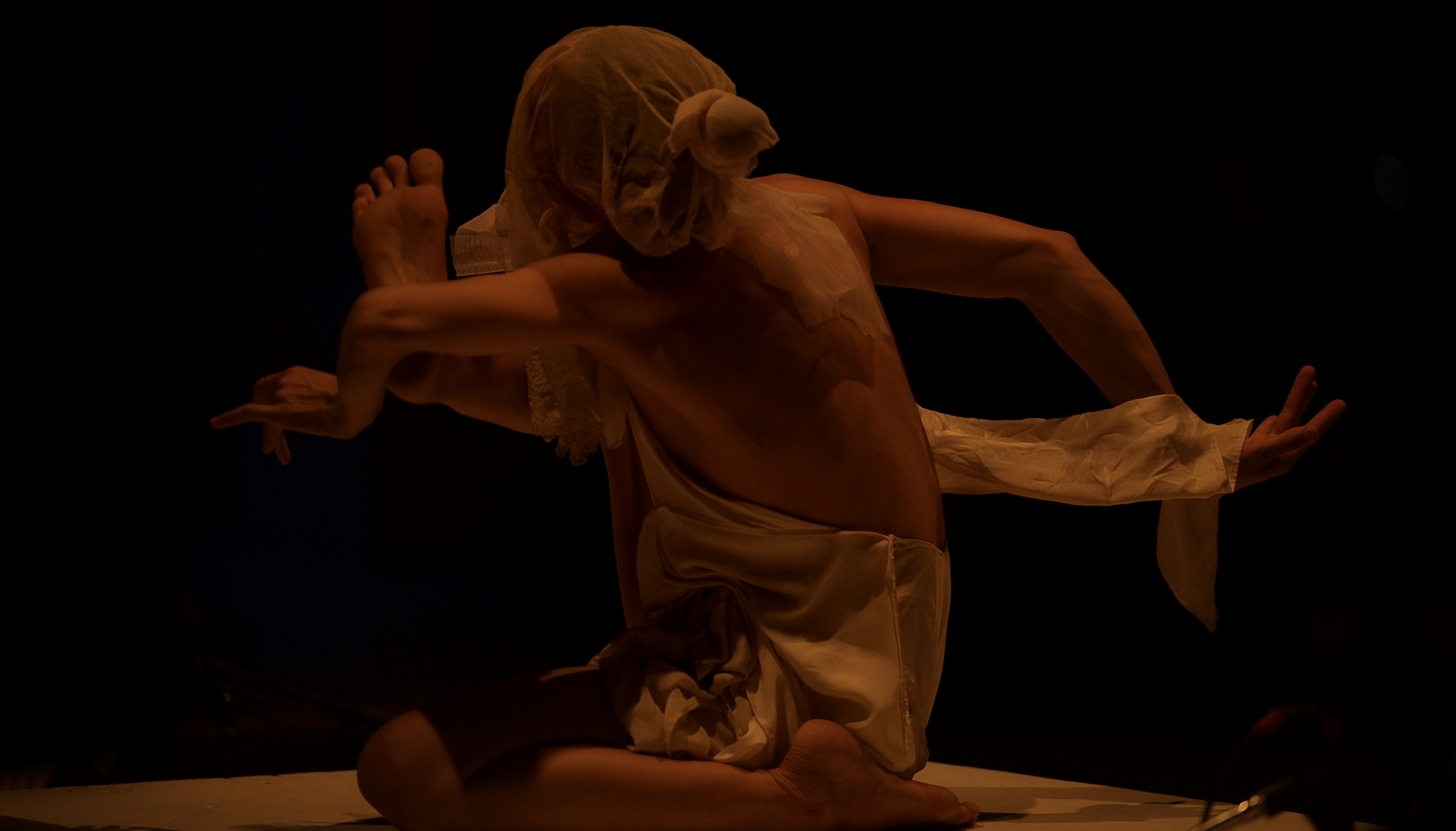
Movement functions as both mirror and counterweight. Katrina Wolfe’s improvised choreography highlights the shifting shapes of the natural harmonics while allowing time to pass at a different perceptual rate. Sound and body become parallel streams — not illustrating one another, but coexisting within a shared durational field.
This work continues my investigation into accessibility, collective listening, and expanded tuning systems. By reducing notation to color and duration, the composition removes hierarchy between trained and untrained musicians, allowing sensitivity and intuition to guide the unfolding form.
The piece has been performed three times in radically different architectural environments: an expansive historical theater, an isolated decommissioned military bunker, and an intimate rural space of spiritual and creative communion. Each setting and ensemble reshaped the acoustic body of the work, reinforcing its underlying premise: tuning is relational; the space and our bodies are never neutral.
All photos by Joey Largent unless indicated otherwise.